RealMe Verified Identity planned maintenance Tuesday 21 April 2026
We are performing maintenance on the RealMe Verified Identity Service on Tuesday 21 April 2026 5.30pm-8.30pm
You will not be able to apply for, manage or use your RealMe Verified Identity during this time.
We apologise for any inconvenience this may cause. The RealMe Login service is not impacted and can be used as usual.
Be you. Really.
RealMe is the most trusted way to prove that you are you, online.
Create a RealMe login and use it to securely access Government online services.
Opt for a RealMe verified identity to prove beyond doubt that you are who you say you are.









RealMe Login
Real access.
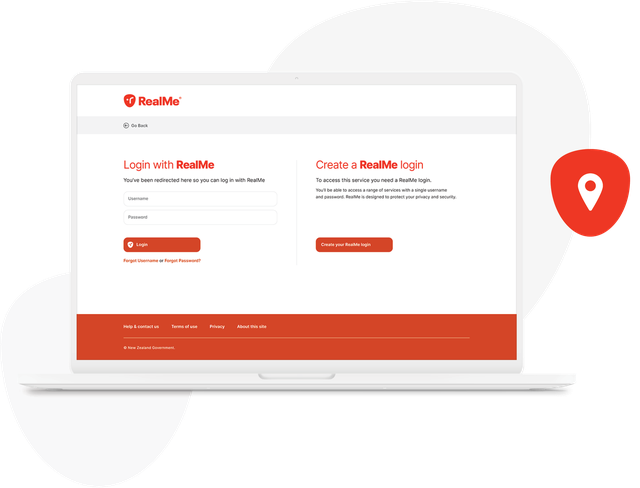
If you need to interact with Government agencies, a RealMe login gives you access to your personal Inland Revenue account and enables you to update your company details, apply for a visa, access a student loan or allowance and lots more. You can use one login to access the online services you use with Government agencies - no more having to remember multiple usernames and passwords!
Create a RealMe login at the site of the Government service you wish to use.
RealMe verified identity
The real deal.
You can use a RealMe verified identity in situations where people must know who they’re dealing with before they can help you. Use a RealMe verified identity to open a bank account, enrol to vote and do a whole lot more.
A Government-grade service
No doubt about it.
For a decade now, RealMe has offered Government-grade login and identification verification services that New Zealand citizens and residents recognise and can absolutely trust. In an age of fakes and identity uncertainty, you can depend on the official identity credential from the New Zealand Government.
Partner with RealMe
Know who you're dealing with.
If you’re a business or Government agency looking to help your customers and clients prove who they are and where they live, add RealMe to your online service. That way, your customers and clients can conveniently verify who they are online for all sorts of interactions. The RealMe login service enables people to access services offered by Government agencies.
Talk to the team
Real answers.
If there’s anything you want to better understand about RealMe, contact our RealMe 24/7 helpdesk on 0800 664 774 or +64 4 462 0674.
If you’re interested in using RealMe in your business, email us at business@realme.govt.nz